
Peptide / Growth Hormone
Andarine
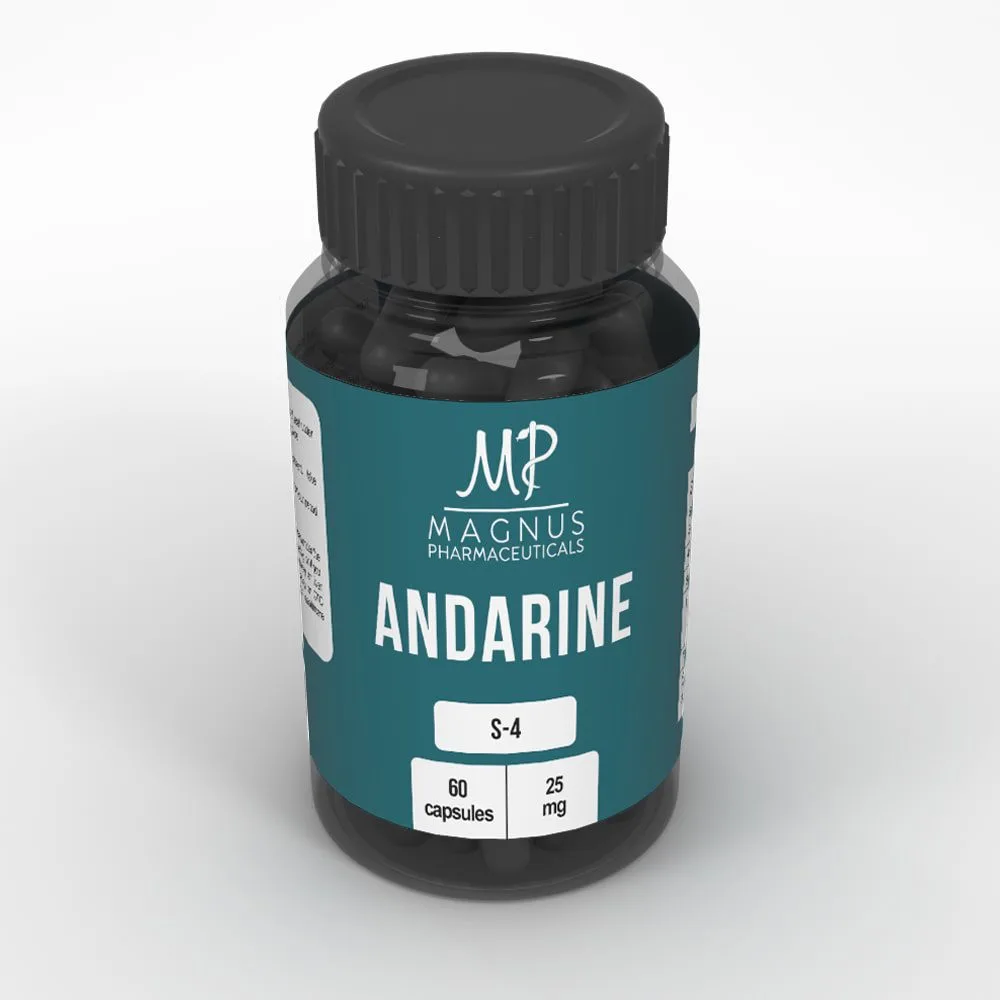
Andarine (S-4) is a selective androgen receptor modulator (SARM) belonging to the Peptide / Growth Hormone class. It’s primarily investigated for its potential anabolic effects, particularly in research settings focused on muscle wasting conditions and strength enhancement. Users report utilizing Andarine due to its relatively mild side effect profile compared to traditional anabolic steroids. Brands like PharmaCom and Magnus Pharmaceuticals are frequently associated with S-4 products.
It is crucial to understand that this compound is for research purposes only, and human consumption is not approved.
Drug Class
Peptide / Growth Hormone
All Products
1 products
Legal status
Research compound (not FDA approved)
All Products — Andarine
How Andarine Works
Andarine selectively binds to androgen receptors in muscle and bone tissue, promoting anabolic effects with minimal impact on other tissues like the prostate or sebaceous glands. This selectivity is achieved through its unique chemical structure, allowing it to bypass many of the side effects associated with non-selective androgen receptor activation. It does not convert into estrogen, eliminating water retention concerns typical with aromatizable compounds.
Users report that Andarine’s primary mechanism involves increasing protein synthesis and nitrogen retention in muscle cells. This leads to enhanced recovery times, increased lean mass, and improved strength gains. However, the effects are dependent on individual factors like dosage, cycle length, diet, and training intensity. It's important to note that it can also bind to receptors in the eye, leading to potential vision disturbances.
Typical Research Applications
Andarine is frequently investigated for its potential to combat muscle wasting associated with chronic illnesses and aging. Athletes typically run Andarine during cutting phases to preserve lean mass while in a caloric deficit. While not primarily a bulking agent, some users report modest gains in muscle size when combined with appropriate nutrition and training.
It's also utilized for strength research due to its ability to enhance neuromuscular efficiency. Post-cycle therapy (PCT) is often considered following an Andarine cycle to help restore natural hormone levels, as it can suppress endogenous testosterone production. Many researchers explore its use in conjunction with other SARMs like Ostarine or Ligandrol.
- Cutting and fat loss
- Lean mass preservation
- Strength enhancement
- Muscle wasting research
- Potential PCT adjunct
Dosage Ranges + Cycle Length
Intermediate users typically run Andarine at doses ranging from 50mg to 75mg per day, divided into two equal administrations. Advanced athletes may increase this to 100mg per day, but exceeding this dosage does not necessarily correlate with proportional gains and significantly increases the risk of side effects.
Cycle lengths typically range from 8 to 12 weeks, followed by a post-cycle therapy (PCT) protocol. A common cycle structure involves an initial loading phase of 50mg/day for the first week, followed by a maintenance dose of 75mg/day for the remaining duration. Bloodwork is strongly recommended before, during, and after the cycle to monitor hormone levels and liver function.
Side Effects + Safety Considerations
The most commonly reported side effect of Andarine is vision disturbance, often described as a yellow tint or difficulty adjusting to low light. This effect typically subsides after cycle completion but can persist in some individuals. Other potential side effects include mild suppression of natural testosterone production, liver stress, and changes in lipid profiles.
Users report that implementing a robust post-cycle therapy (PCT) protocol is crucial for restoring hormone balance. Regular bloodwork to monitor liver enzymes, cholesterol levels, and testosterone is strongly advised. Andarine should only be considered by individuals 21 years of age or older with no pre-existing medical conditions. It's essential to stay adequately hydrated throughout the cycle.
Mechanism of action
Andarine exhibits selective binding affinity for androgen receptors in skeletal muscle and bone tissue, leading to increased protein synthesis, nitrogen retention, and subsequent anabolic effects with reduced impact on other tissues.
Also known as
AndarineAndarolGTx‑007
Questions & answers
What is S4 (Andarine)?
Andarine, or S-4, is a selective androgen receptor modulator investigated for its anabolic properties. It’s primarily used in research contexts to study muscle wasting and strength enhancement.
How does Andarine affect protein synthesis?
Users report that Andarine increases protein synthesis by selectively binding to androgen receptors in muscle tissue, promoting nitrogen retention and enhancing the rate of muscle recovery.
Is S4 (Andarine) legal?
Andarine is not FDA approved for human consumption and is classified as a research compound. Its legal status varies depending on location; it's often sold 'not for human use'.
What are the common beginner mistakes with S4 (Andarine)?
Common mistakes include exceeding recommended dosages, neglecting post-cycle therapy (PCT), and failing to monitor bloodwork. Starting with a lower dose is advisable.
Is a PCT necessary after an Andarine cycle?
Yes, a PCT is typically recommended following an Andarine cycle to help restore natural testosterone production levels which can be suppressed by its use.
Related peptide / growth hormones
CJC-1295 with DAC
CJC-1295 with DAC is the active compound in 1 product in the PoseidonRX catalogue.…
View →Human Growth Hormone
Human Growth Hormone is the active compound in 2 products in the PoseidonRX catalogue (als…
View →Ipamorelin
Ipamorelin is the active compound in 1 product in the PoseidonRX catalogue.…
View →LGD‑4033
LGD‑4033 is the active compound in 1 product in the PoseidonRX catalogue (also known as EA…
View →