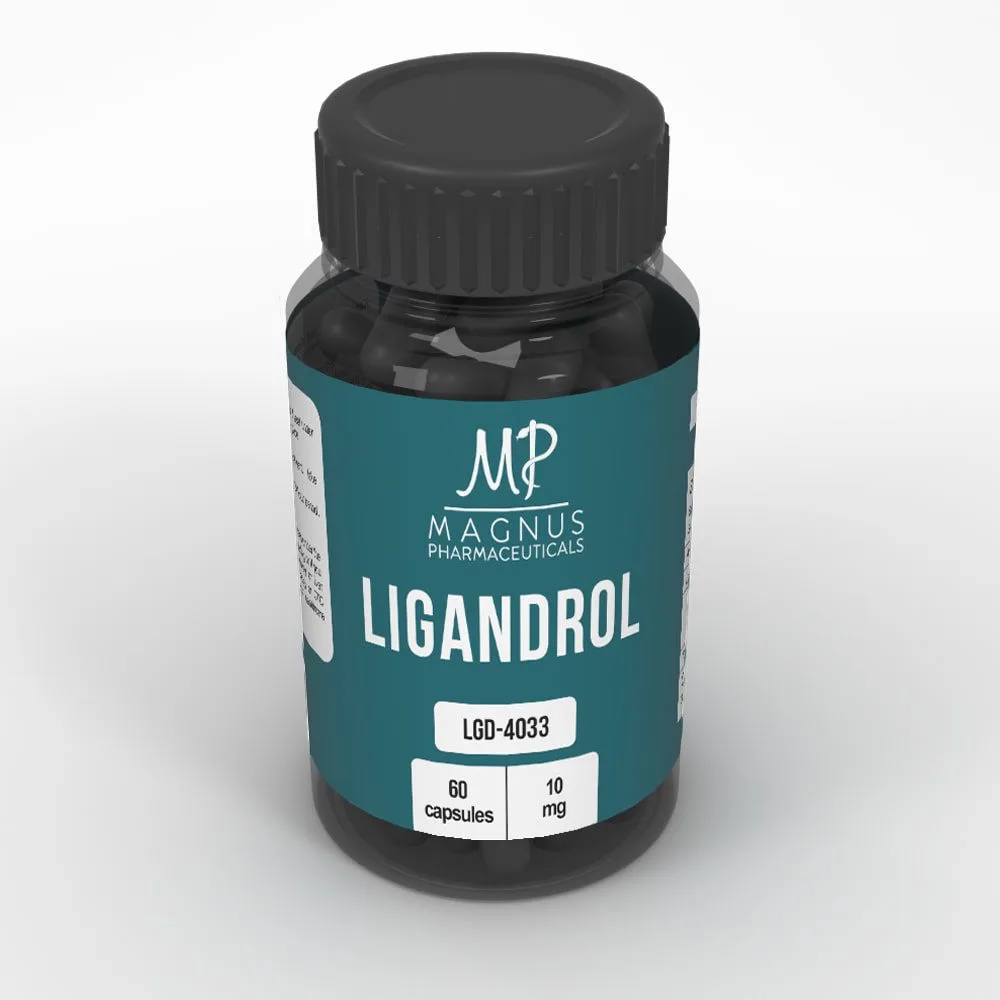
Magnus Ligandrol (LGD‑4033) is a selective androgen receptor modulator (SARM) popular among bodybuilders and performance researchers. This oral compound, available in 10mg tablets with 60 tabs per bottle, offers a targeted approach to muscle growth by selectively binding to androgen receptors in skeletal muscle tissue. Users report that LGD‑4033 may promote lean mass gains while minimizing unwanted side effects commonly associated with traditional anabolic steroids.
About Ligandrol: How it Works
Ligandrol, or LGD‑4033, belongs to a class of compounds known as SARMs. Unlike anabolic steroids which activate androgen receptors throughout the body, LGD‑4033 exhibits greater selectivity for muscle and bone tissue. This targeted action is achieved through its binding affinity to androgen receptors in these tissues. Users report that this selectivity leads to increased protein synthesis, reduced muscle wasting, and enhanced recovery rates. The compound does not convert to estrogen, eliminating concerns about gynecomastia or water retention.
Research suggests LGD‑4033 works by mimicking the effects of testosterone without many of the negative side effects associated with it. It’s important to note that this is a research-grade substance and should be treated as such.
Key Benefits Users Report
Bodybuilders and performance researchers typically utilize LGD‑4033 for its potential to promote several beneficial effects. Users report significant increases in lean muscle mass, even with limited training experience. Strength gains are also frequently observed, allowing athletes to push their limits during workouts. The oral administration route provides a convenient alternative to injections. Furthermore, Magnus Ligandrol exhibits minimal impact on natural testosterone production compared to many other compounds.
According to bodybuilding-community protocols, LGD‑4033 is often favored for its relatively mild side effect profile when used responsibly and coupled with appropriate post-cycle therapy (PCT). However, individual responses can vary significantly.
- May promote lean muscle growth
- Reported strength increases
- Convenient oral administration
- Minimal estrogen conversion
- Faster recovery times
Stacking and Pairing Options
LGD‑4033 can be effectively stacked with other SARMs to amplify its effects, although users should proceed with caution. A common pairing is with Ibutamoren (MK-677) to enhance growth hormone release and further promote muscle anabolism. Stacking with S-23 is also reported by some athletes for synergistic benefits; however, this combination requires advanced knowledge due to the potency of S-23.
Athletes typically run LGD‑4033 alone during their initial cycles to assess individual tolerance and response. Combining SARMs increases the potential for side effects, so careful monitoring and appropriate PCT are crucial. Always research compatibility and potential interactions before stacking compounds.
Safety & Side Effects
While LGD‑4033 is often described as having a milder side effect profile than traditional anabolic steroids, it’s not without potential risks. Users report the most common side effects include mild suppression of natural testosterone production, requiring post-cycle therapy (PCT) upon cycle completion. Other possible side effects may include headaches and fatigue.
Hepatotoxicity is a concern with all oral compounds; therefore, liver support supplements are recommended during use. It's crucial to perform regular blood work to monitor hormone levels and liver function before, during, and after the cycle. This product is intended for research purposes only and should not be used by individuals under 21 years of age.
Questions & answers
What is LGD‑4033 (Ligandrol)?
LGD‑4033 is a selective androgen receptor modulator (SARM) used for research purposes, primarily to investigate muscle growth and recovery. It selectively targets androgen receptors in muscle tissue.
What Is RAD‑140 vs LGD-4033?
RAD-140 is another SARM known for its potency; users report it’s stronger than LGD-4033. LGD-4033 is generally considered milder with a lower risk of side effects.
What dosage should I use?
Dosage varies based on experience level and individual response. Users typically start with 5-10mg per day for beginners, increasing as tolerated (see Dosage section).
Is a PCT necessary after an LGD‑4033 cycle?
A post-cycle therapy (PCT) is highly recommended to help restore natural testosterone production following an LGD‑4033 cycle. Failure to do so may result in hormone imbalances.