
Post-Cycle Therapy
Human Chorionic Gonadotropin
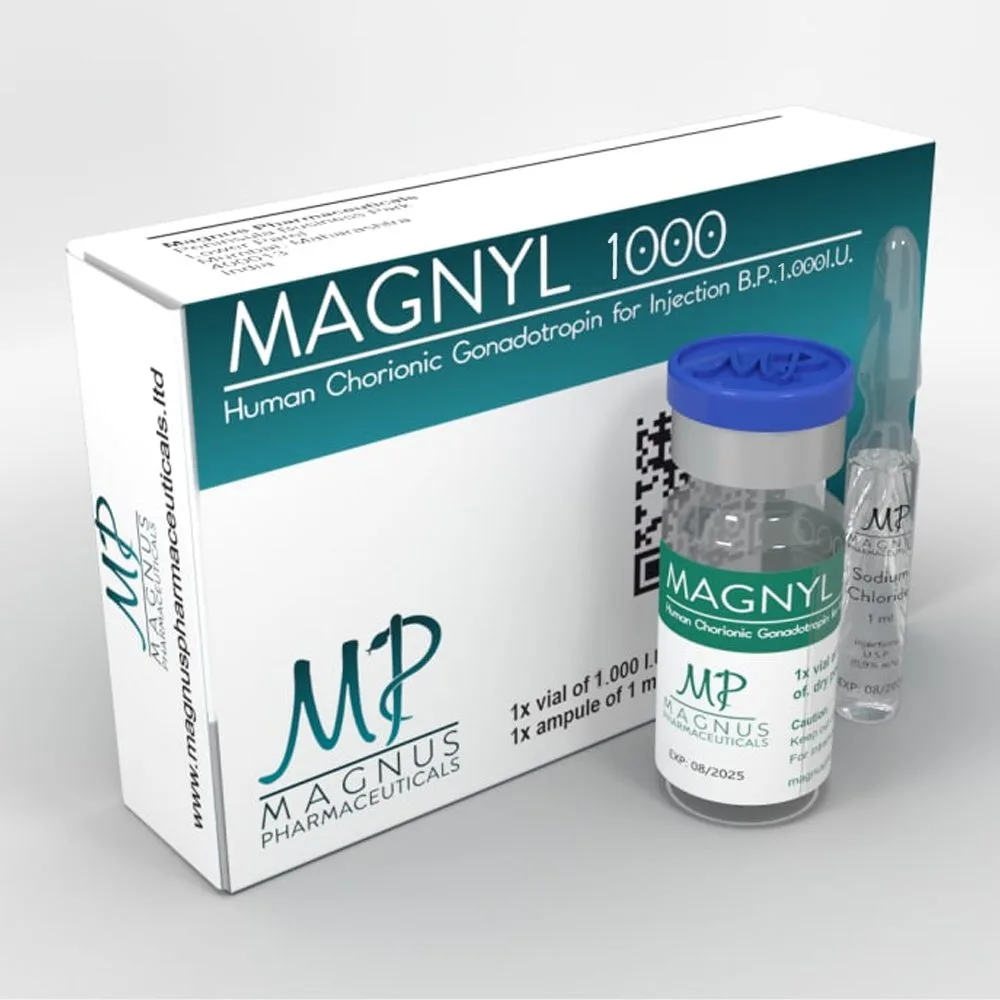
Human Chorionic Gonadotropin (hCG) is a hormone belonging to the Post-Cycle Therapy (PCT) class, primarily researched for its ability to restore natural testosterone production following cycles of anabolic steroids. Users report it’s effective in mitigating post-cycle shutdown and preserving gains. Leading brands include Pregnyl and Ovidrel.
hCG is not an anabolic steroid itself; rather, it mimics luteinizing hormone (LH), stimulating the testes to produce testosterone. It's crucial to understand that hCG should be used strategically as part of a comprehensive PCT protocol, not as a standalone solution.
Drug Class
Post-Cycle Therapy
All Products
4 products
Legal status
Research compound (not FDA approved)
All Products — Human Chorionic Gonadotropin
How hCG Works
hCG functions by binding to LH receptors in the Leydig cells of the testes. This mimics the action of natural LH, prompting increased testosterone synthesis. The hormone also stimulates estrogen production, which is important for maintaining muscle fullness and overall hormonal balance during PCT. Users report that this stimulation helps prevent excessive muscle loss and supports recovery.
Pharmacologically, hCG has a relatively short half-life, necessitating frequent administration to maintain stable blood levels. It’s crucial to understand the hormone's action is dependent on functional testes; individuals with pre-existing testicular damage may experience limited benefit.
Typical Research Applications
The primary research application of hCG lies in Post-Cycle Therapy (PCT) following the cessation of anabolic steroid use. Athletes typically run hCG to accelerate the recovery of the hypothalamic–pituitary–gonadal axis, which is suppressed by exogenous testosterone. This helps restore natural testosterone production more quickly.
While less common, some researchers investigate its potential in treating hypogonadism and male infertility. However, these applications are outside the scope of typical bodybuilding-related research. It's also studied as an adjunct to Testosterone Replacement Therapy (TRT) for maintaining spermatogenesis.
Dosage Ranges + Cycle Length
Intermediate users typically administer hCG at doses ranging from 500–1000 IU administered every other day, starting approximately two days after the final steroid injection. A common cycle length is 10-20 days, though this varies based on the ester used in the preceding cycle (longer esters require longer PCT). More advanced users may utilize protocols of 2000–4000 IU per week split into multiple injections.
It's important to note that individual responses vary significantly. Bloodwork is essential to monitor testosterone levels and adjust dosage accordingly. Prolonged use or excessive dosages can lead to downregulation of LH receptors, rendering the hormone ineffective.
Side Effects + Safety Considerations
Users report potential side effects including gynecomastia (due to estrogen conversion), testicular shrinkage (with prolonged use), and increased water retention. Hepatotoxicity is generally not a concern with hCG itself, but it can exacerbate existing liver issues.
A Post-Cycle Therapy (PCT) protocol incorporating aromatase inhibitors (e.g., Anastrozole) and selective estrogen receptor modulators (SERMs) (e.g., Clomid, Nolvadex) is often recommended to manage estrogen levels and mitigate side effects. Age 21+ only. Regular bloodwork is crucial for monitoring hormone levels, liver function, and overall health.
Mechanism of action
Human Chorionic Gonadotropin binds to LH receptors in Leydig cells, stimulating testosterone synthesis and estrogen production; it mimics endogenous luteinizing hormone (LH), supporting gonadal function.
Also known as
PregnylOvidrelLutrinOxandrolone (AnavarTestosterone CypionateTrenbolone EnanthateAnastrozole (Arimidex)hCG (Gonadotropin)Clomid (Clomiphene Citrate)Nolvadex (Tamoxifen Citrate)Gonal‑FTUDCA
Questions & answers
What is the purpose of hCG in PCT?
hCG’s primary role in PCT is to stimulate natural testosterone production by mimicking luteinizing hormone (LH), helping restore hormonal balance after steroid cycles.
Can hCG be used on its own for TRT?
While some research exists, hCG is typically used as an adjunct to Testosterone Replacement Therapy (TRT) to support spermatogenesis, not as a standalone treatment.
How often should bloodwork be conducted during an hCG cycle?
Bloodwork should be performed before starting hCG, mid-cycle (around day 7), and post-cycle (7–14 days after cessation) to monitor testosterone levels and assess recovery.
What are the risks of prolonged hCG use?
Prolonged or excessive hCG use can lead to downregulation of LH receptors, potentially reducing its effectiveness and causing testicular shrinkage. Careful monitoring is essential.
Is aromatization a concern with hCG administration?
Yes, hCG stimulates estrogen production, which may necessitate the use of an aromatase inhibitor (AI) like Anastrozole to manage potential side effects such as gynecomastia.