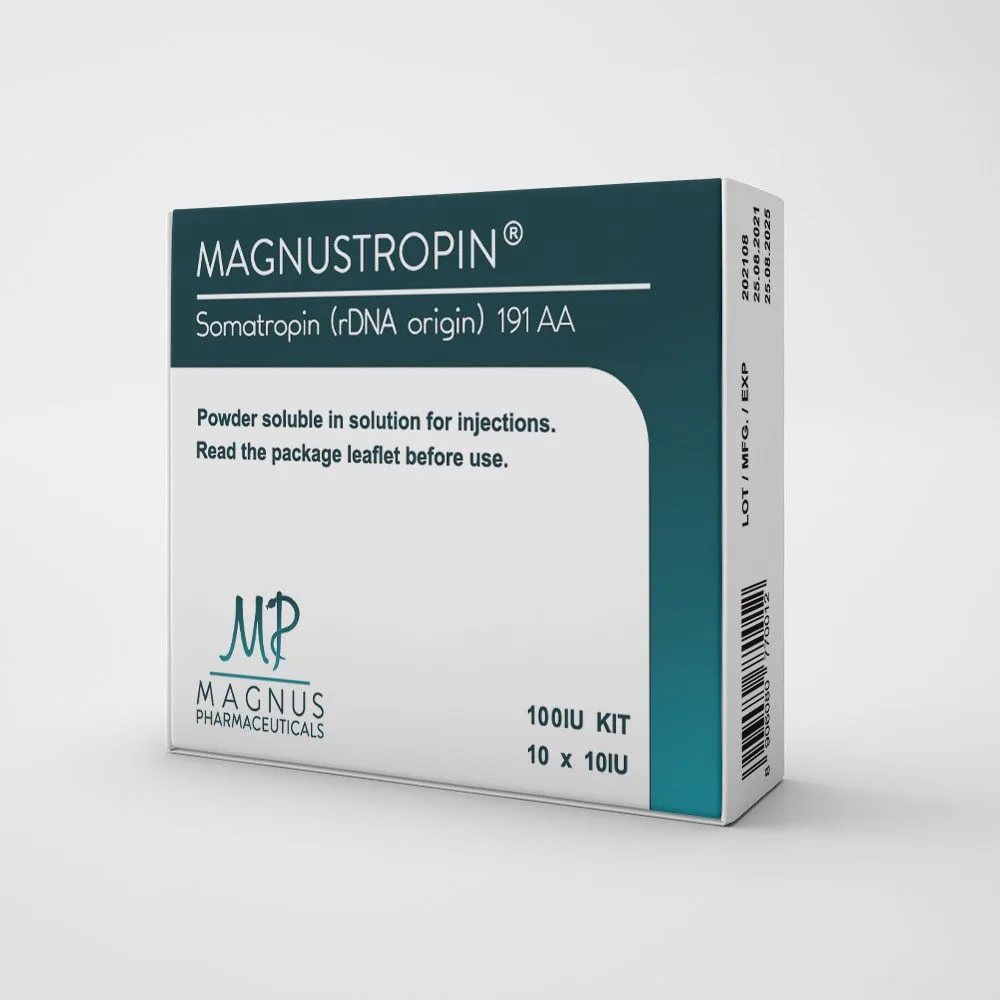
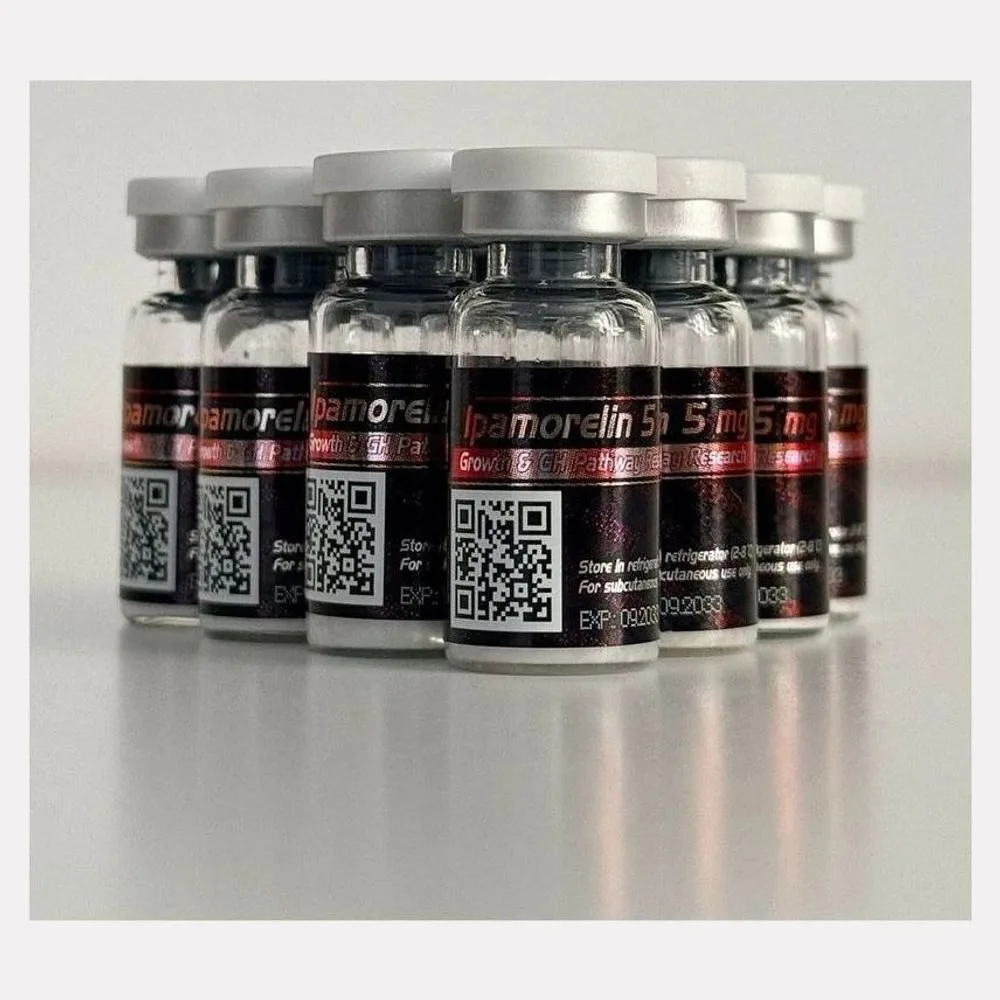
Magnustropin, manufactured by Magnus Pharmaceuticals, is a pharmaceutical-grade Human Growth Hormone (HGH) intended for research and educational purposes. This potent peptide consists of 191 amino acids and is primarily utilized in studies investigating growth deficiencies, muscle recovery, and athletic performance enhancement. Each package contains ten 100IU vials along with bacteriostatic water for reconstitution, offering a convenient and precise dosage control.
About Human Growth Hormone
Human Growth Hormone (HGH) is naturally produced by the pituitary gland and plays a critical role in growth, cell regeneration, and metabolic processes. As a peptide hormone, HGH functions as an anabolic agent, stimulating protein synthesis and promoting tissue repair. Magnustropin provides a highly purified form of this essential hormone for research applications. Users report utilizing it to study the effects of increased HGH levels on muscle mass, fat loss, and overall recovery rates. It’s important to note that individual responses can vary significantly.
Key Benefits for Research
Researchers commonly investigate HGH for its potential effects on several key areas. Increased muscle mass and strength are frequently observed in studies, alongside accelerated fat metabolism. HGH may also contribute to improved recovery times after strenuous exercise. Furthermore, research suggests a role in collagen synthesis, potentially benefiting joint health. It is crucial to understand that these benefits are based on reported observations from the bodybuilding community and do not constitute medical claims.
- Potential for increased lean muscle mass
- May support accelerated fat loss
- Reported improvements in recovery rates
- Possible positive impact on collagen synthesis
- Investigation of metabolic effects
Stacking and Pairing Protocols
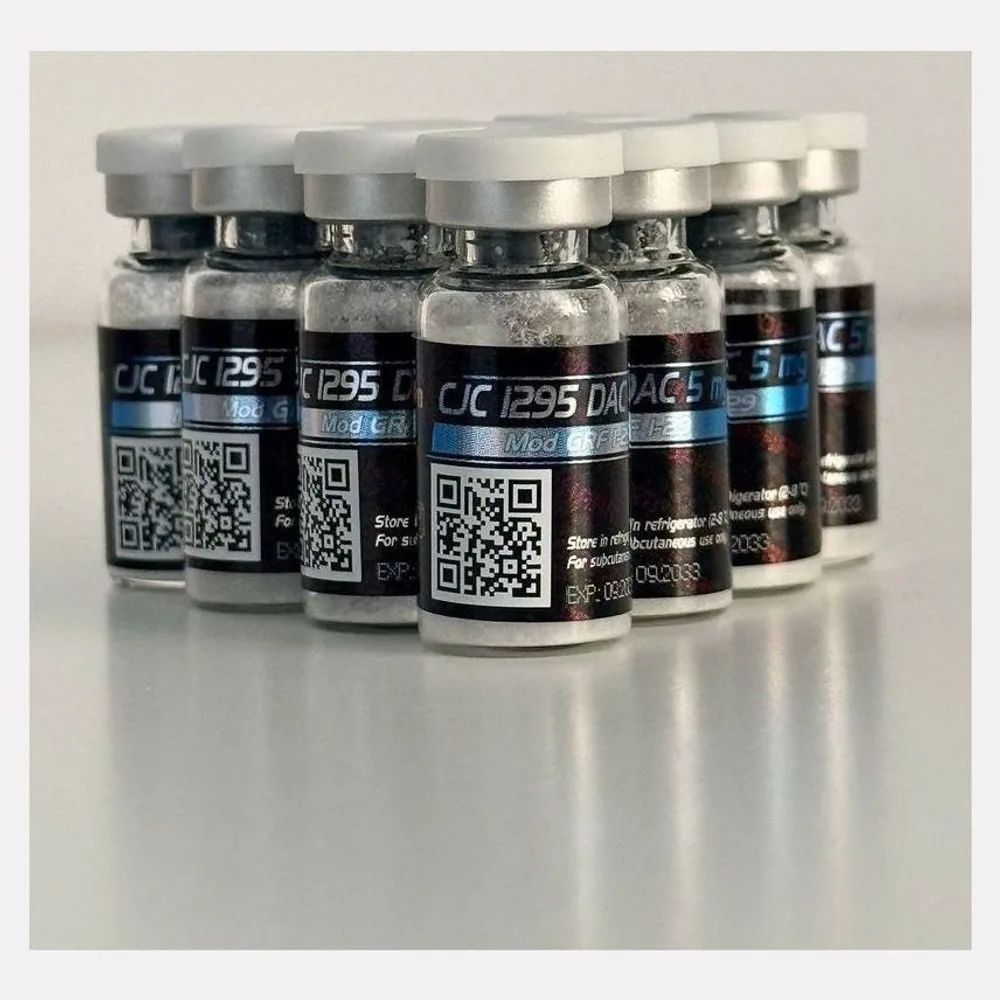
Athletes typically run HGH alongside other compounds to potentiate its effects. Common pairings include anabolic steroids like Testosterone Enanthate (Phacom, Magnus) for synergistic muscle-building results. Combining with Insulin-like Growth Factor 1 (IGF-1) is also reported to enhance growth hormone activity. Some users incorporate peptides such as CJC-1295/IPAMORELIN to stabilize HGH levels and increase its half-life. It is vital to emphasize that stacking compounds carries increased risks and requires thorough understanding of each substance’s properties.
Safety & Potential Side Effects
HGH use, even for research purposes, is not without potential side effects. Users report possible water retention, carpal tunnel syndrome, and joint pain. Long-term administration may lead to insulin resistance or increased prolactin levels. It’s crucial to implement a Post Cycle Therapy (PCT) protocol after completing an HGH cycle to restore natural hormone balance. Regular blood work is strongly recommended to monitor hormone levels, lipid profiles, and overall health. This product is intended for users aged 21+ with prior experience in peptide research.
Questions & answers
What is the typical shelf life of Magnustropin?
When stored properly (2-8°C) after reconstitution, Magnustropin typically maintains its potency for 21–28 days.
Is a Post Cycle Therapy (PCT) necessary with Magnustropin?
While HGH doesn't directly suppress endogenous testosterone production like some anabolic steroids, users report implementing a PCT to help restore natural hormone balance and minimize potential side effects.
What is the recommended injection frequency for research purposes?
Athletes typically run injections 5–7 times per week at consistent intervals. Dosage adjustments should be based on individual responses and blood work results.
Can Magnustropin cause gynecomastia?
Directly, HGH is unlikely to cause gynecomastia. However, when stacked with aromatizable compounds like Testosterone, the risk of estrogen-related side effects may increase.