🔒
SSL
✅
Verified
📦
Discreet
Fat Burners Injectable
Performance
Strength 4/5
Mass Gain 4/5
Fat Burn 2/5
Recovery 3/5
Side Effects 3/5
€170.00
In stock

Why order from PoseidonRX
Secure SSL Checkout
Encrypted end to end. No card details stored on site.
Verified & Lab-Tested
Sourced from vetted pharmaceutical manufacturers.
Discreet Packaging
Plain, unmarked parcels. Private billing descriptor.
Reship Guarantee
Lost or seized in transit? We reship at no cost.
Shipping & delivery
- Tracked worldwide shipping · typically 5–12 days
- Reship guarantee on lost or seized parcels
Accepted payment methods
Fast, secure card checkout powered by Stripe — Apple Pay & Google Pay supported. Your card details never touch our servers.
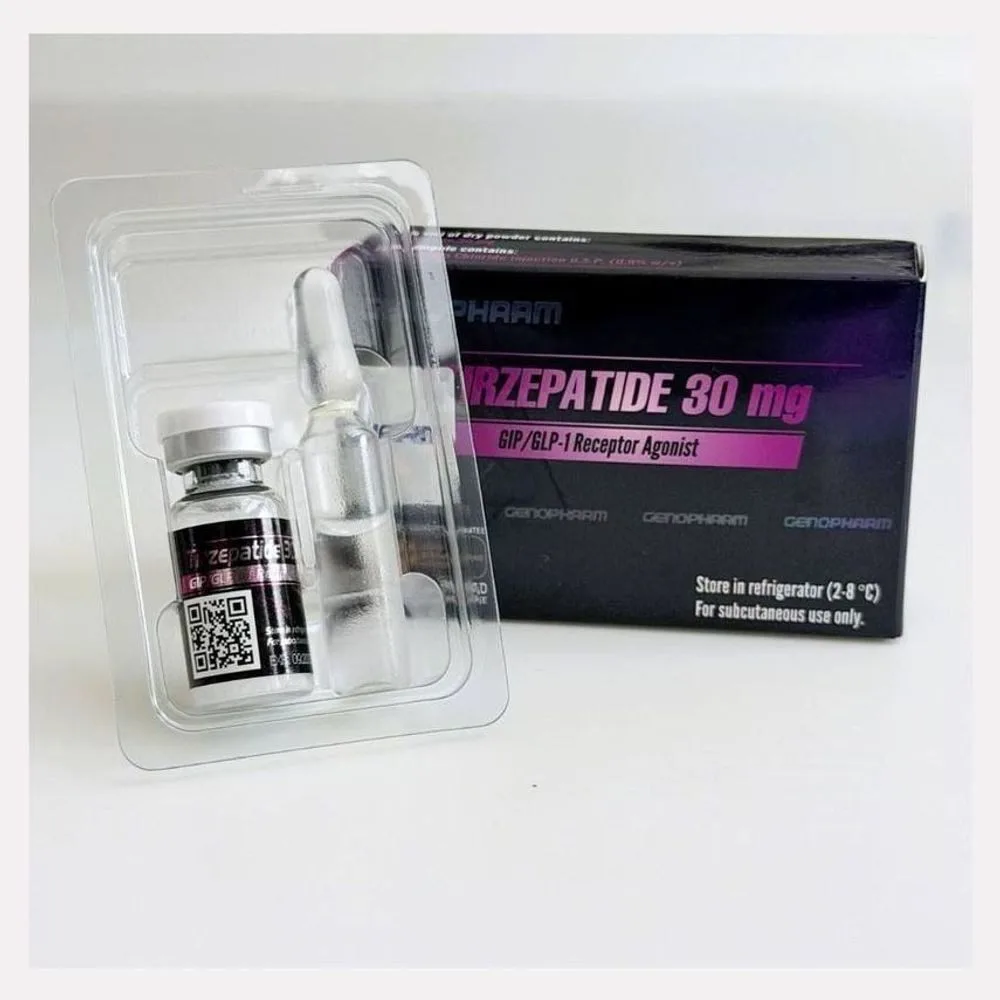
Tirzepatide 30mg – Genopharm
Genopharm Tirzepatide (30 mg) is a synthetic peptide designed to mimic the actions of two incretin hormones: Glucose-dependent Insulinotropic Polypeptide (GIP) and Glucagon-Like Peptide-1 (GLP-1). This dual-agonist mechanism distinguishes it from single-target compounds, potentially offering enhanced satiety and metabolic regulation. It is primarily utilized in research settings to study appetite suppression, insulin sensitivity, and body composition changes in adult subjects. The product is supplied as a 30 mg lyophilized powder, requiring reconstitution before subcutaneous administration. Athletes and researchers typically use this compound to manage caloric intake and support fat loss phases without the aggressive suppression of appetite seen in some other agents. It is not a traditional anabolic steroid or SARM, but a metabolic modulator. Users should understand that this is a research chemical, not a medical drug, and should consult relevant literature and healthcare professionals before use. Proper storage, including cold chain maintenance after mixing, is critical for stability.
Mechanism of Action
Tirzepatide functions as a dual receptor agonist, targeting both GIP and GLP-1 receptors. This combined action amplifies the physiological effects of each hormone individually. By stimulating the GLP-1 receptor, the peptide slows gastric emptying and enhances satiety signals to the brain, leading to reduced food intake. Simultaneously, GIP receptor activation improves insulin secretion in a glucose-dependent manner, helping to manage blood sugar levels after meals. This dual mechanism is why Tirzepatide is often cited in community protocols for its potent appetite-suppressing properties. Users report a significant reduction in hunger pangs and cravings, which can make maintaining a caloric deficit more manageable. The compound also influences the pancreas to release glucagon, further aiding in glucose homeostasis. Because it acts on multiple pathways, the effect on weight loss may be more pronounced than with single-target agents. However, the intensity of these effects varies by individual, and titration is essential to avoid gastrointestinal distress. Researchers emphasize that the peptide’s half-life allows for once-weekly dosing, which is a practical advantage for long-term studies.
Key Benefits
Users of Tirzepatide typically report several distinct benefits associated with its dual-agonist profile. The primary advantage is marked appetite suppression, which helps prevent overeating and supports adherence to dietary restrictions. Many individuals note improved satiety, meaning they feel full for longer periods after consuming smaller meals. Additionally, the compound may enhance insulin sensitivity, which is beneficial for those managing metabolic health or recovering from periods of poor dietary control. Fat loss is a common outcome, particularly when combined with a consistent caloric deficit and exercise regimen. Some users also report improved lipid profiles, though this is less consistently documented than weight loss. The once-weekly dosing schedule is another significant benefit, as it simplifies the administration process compared to daily injections. It is important to note that these benefits are observed in research contexts and individual experiences may vary. The 30 mg strength allows for precise titration, enabling users to start low and adjust as needed to find their optimal therapeutic window.
- Potent appetite suppression via dual GIP/GLP-1 agonism
- Improved satiety and reduced caloric intake
- Enhanced insulin sensitivity and glucose control
- Once-weekly dosing for convenience
Stacking and Pairing
Tirzepatide is often used in isolation due to its potent effects on appetite and metabolism. However, some athletes pair it with other compounds to support specific goals. When combined with anabolic steroids or SARMs, Tirzepatide may help mitigate the appetite stimulation sometimes associated with these agents, allowing for better control over caloric intake. It is generally not stacked with other GLP-1 agonists like semaglutide, as this could lead to excessive gastrointestinal side effects and unnecessary cost. Users should be cautious when combining Tirzepatide with compounds that affect gastric motility, as the additive effect may increase the risk of nausea or vomiting. In cutting phases, it is frequently paired with a high-protein diet to preserve lean mass while losing fat. Some researchers also explore its use alongside thyroid hormones, though this requires careful monitoring. Always start with a low dose of Tirzepatide when introducing it to a stack to assess individual tolerance. The 30 mg vial provides sufficient quantity for multiple weeks of titration and maintenance dosing.
Safety and Side Effects
While Tirzepatide is generally well-tolerated in research settings, users must be aware of potential side effects. Gastrointestinal issues are the most common, including nausea, vomiting, diarrhea, and constipation. These symptoms are often dose-dependent and may subside as the body adjusts to the compound. To minimize these effects, users should start with a low dose and titrate slowly over several weeks. Dehydration is a risk, particularly if gastrointestinal symptoms are severe, so adequate fluid intake is crucial. There is also a potential for hypoglycemia, especially in individuals with pre-existing insulin resistance or those taking other glucose-lowering agents. Users should monitor blood sugar levels if they have a history of hypoglycemic episodes. Long-term safety data in non-clinical research settings is limited, so caution is advised. Proper storage is essential; the reconstituted peptide must be kept refrigerated and used within a specific timeframe to maintain potency. Always source from reputable suppliers to ensure purity and sterility.
- Gastrointestinal distress (nausea, vomiting, diarrhea)
- Risk of hypoglycemia in susceptible individuals
- Dehydration due to fluid loss
- Need for proper refrigeration after reconstitution
Questions & answers
How long does a 30mg vial last?
A 30 mg vial of Tirzepatide typically lasts for several weeks, depending on the dosing schedule. If used at 5 mg per week, it lasts six weeks. At 10 mg per week, it lasts three weeks. At higher doses like 15 mg or 20 mg per week, the vial will last two weeks or less. Users should reconstitute the powder with bacteriostatic water and store it refrigerated.
Can Tirzepatide be stacked with SARMs?
Yes, Tirzepatide can be stacked with SARMs. Many users report that it helps manage the appetite stimulation often caused by SARMs, making it easier to maintain a caloric deficit. However, start with a low dose of Tirzepatide to assess tolerance, as the combination may intensify gastrointestinal side effects. Monitor your body's response closely.
What is the recommended starting dose?
Users typically start with a low dose, such as 2.5 mg or 5 mg per week, to allow the body to adjust. This initial phase lasts for one to two weeks. If tolerated, the dose can be increased by 2.5 mg or 5 mg increments every two weeks. Always prioritize tolerability over rapid dose escalation to minimize gastrointestinal side effects.
Does Tirzepatide cause muscle loss?
Tirzepatide itself does not directly cause muscle loss, but the significant caloric deficit it promotes can lead to muscle catabolism if protein intake is insufficient. To preserve lean mass, users should consume adequate protein, engage in resistance training, and consider stacking with anabolic agents if necessary. Monitoring body composition is recommended.
Dosage Guide
Tirzepatide dosing is highly individual and requires careful titration. Users report starting with low doses to minimize gastrointestinal side effects. The 30 mg strength allows for flexible dosing schedules. Athletes typically run once-weekly injections, adjusting the dose based on tolerance and desired outcomes. It is crucial to start low and go slow, increasing the dose every two weeks if needed. Always reconstitute the powder with bacteriostatic water and store the solution refrigerated. Do not exceed recommended doses without professional guidance.
| Experience | Typical Dose (men) | Typical Dose (women) | Cycle length |
|---|---|---|---|
| Beginner | 2.5-5 mg/week | 2.5-5 mg/week | 4-8 weeks |
| Intermediate | 7.5-10 mg/week | 5-7.5 mg/week | 8-12 weeks |
| Advanced | 15-20 mg/week | 10-15 mg/week | 12+ weeks |
Practical tips
- Start with 2.5 mg/week to assess tolerance before increasing.
- Inject subcutaneously in the abdomen, thigh, or upper arm.
- Stay hydrated to mitigate gastrointestinal side effects.
- Store reconstituted peptide in the refrigerator, not the freezer.
⚠️ Safety
- Gastrointestinal distress is common; titrate slowly to avoid nausea.
- Risk of hypoglycemia if combined with other glucose-lowering agents.
- Dehydration can occur; ensure adequate fluid and electrolyte intake.
Reviews
4.8
★★★★★
4 verified reviews
5★
4★
3★
2★
1★
Stefan B. 🇦🇹 Verified buyer
2025-09-29 ★★★★★
Top tier
Third order with PoseidonRX. Consistent quality every single time. Trustworthy store.
Niko P. 🇬🇷 Verified buyer
2025-08-23 ★★★★★
Great communication
Had a question before ordering, support replied within a day. Item exactly as listed.
Tomáš H. 🇨🇿 Verified buyer
2025-07-17 ★★★★☆
Good value
Pricing is fair compared to elsewhere and the product is the real deal. Will buy again.
Sven L. 🇸🇪 Verified buyer
2025-06-10 ★★★★★
Clean and reliable
No issues at all, reship guarantee gave me peace of mind. Delivered ahead of estimate.