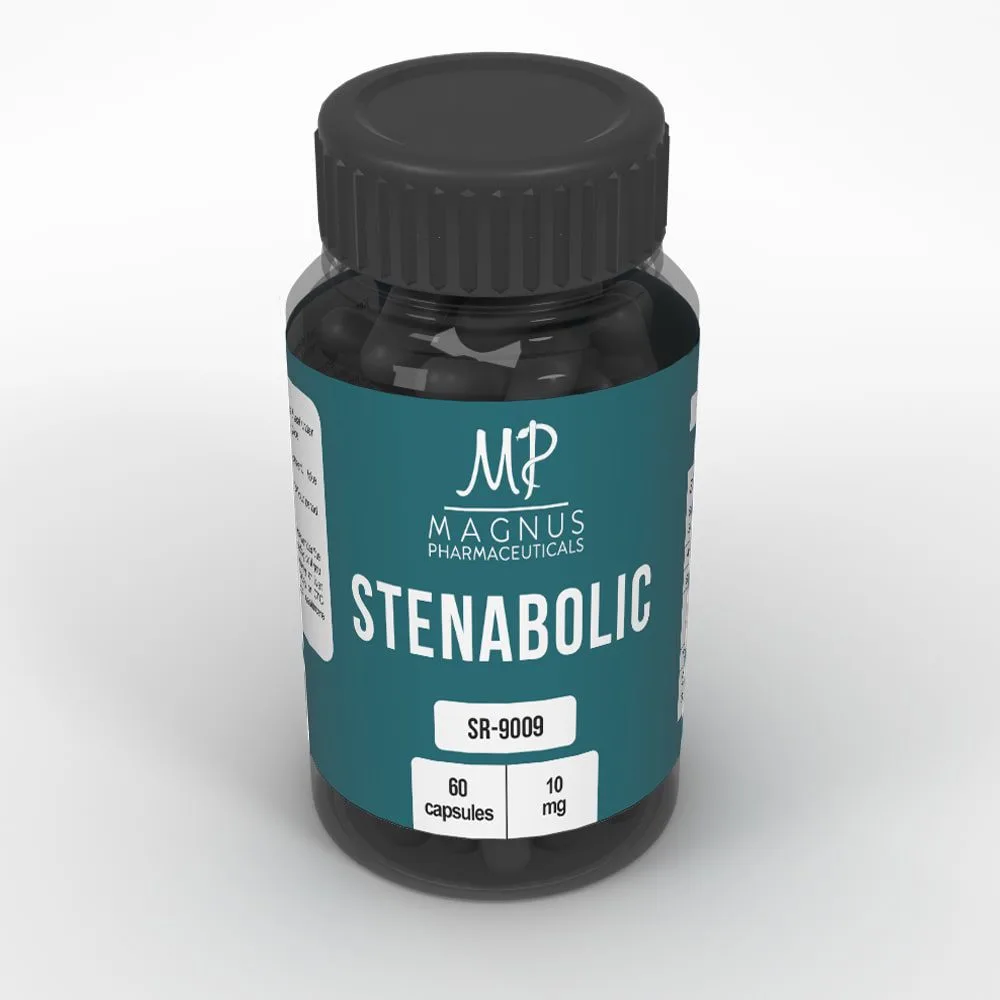
Stenabolic 60 tabs, 10 mg by Magnus is a potent research compound belonging to the SARM (Selective Androgen Receptor Modulator) class. Primarily used for its metabolic-enhancing properties, Stenabolic (SR9009) aims to support fat reduction and improve endurance capacity in performance researchers. This product is intended solely for laboratory investigation and not human consumption.
About SR9009: How It Works
SR9009, developed at The Scripps Research Institute (TSRI), functions as a REV-ERBα agonist. This means it activates the REV-ERBα receptor, which plays a crucial role in regulating circadian rhythms and metabolic processes. Activation of this receptor is associated with increased mitochondrial activity, enhanced glucose uptake, and improved lipid metabolism. Users report that SR9009 mimics some effects of endurance exercise without requiring physical exertion. The compound does not directly bind to androgen receptors like traditional SARMs.
- Activates REV-ERBα receptor
- Increases mitochondrial biogenesis
- Enhances glucose uptake in skeletal muscle
- Supports lipid metabolism and fat oxidation
- May improve endurance capacity
Key Benefits for Research Purposes
Athletes typically run SR9009 cycles to investigate potential benefits related to metabolic enhancement. Users report improvements in stamina and cardiovascular function during research studies. The compound is believed to influence AMPK pathway activation, which regulates energy expenditure. Some preclinical research suggests a possible role in tumor suppression, although this requires further investigation. It's important to note that these effects are based on preliminary findings and should not be interpreted as guaranteed outcomes.
- Potential for increased endurance
- Improved lipid metabolism
- Possible AMPK pathway activation
- May support cardiovascular health (research studies)
- Enhanced mitochondrial function
Stacking and Pairing Considerations
For research purposes, Stenabolic is often paired with other compounds to investigate synergistic effects. Common pairings include peptides like GHRP-6 or CJC-1295 for potential growth hormone release enhancement. Some users report combining it with mild SARMs such as Ostarine (MK-2866) to explore impacts on body recomposition, but this is not a standard protocol and requires careful consideration. Always prioritize thorough research before attempting any stacking combinations.
- GHRP-6 / CJC-1295 (potential GH release synergy)
- Ostarine (MK-2866) – for body recomposition studies
- GW-501516 – to investigate combined metabolic effects
- Consider cycle length and individual response when stacking
Safety & Potential Side Effects
Stenabolic is a potent research compound, and its long-term effects are not fully understood. Users should always implement a Post Cycle Therapy (PCT) protocol following SR9009 cycles to help restore natural hormonal balance. Hepatotoxicity is a potential concern with some compounds; liver enzyme monitoring via blood work is strongly advised. This product is intended for adult researchers aged 21+ only. Discontinue use if any adverse effects are observed.
- Always run PCT after cycle completion
- Regular blood work to monitor liver enzymes
- Not for use by individuals under 21 years of age
- Potential for altered sleep patterns – monitor and adjust dosage accordingly.
- Discontinue use if experiencing adverse effects.
Questions & answers
What is the primary mechanism of action of SR9009?
SR9009 primarily acts as a REV-ERBα agonist, influencing circadian rhythms and metabolic processes by enhancing mitochondrial activity.
Is Stenabolic considered an anabolic steroid?
No, Stenabolic (SR9009) is not an anabolic steroid. It does not directly bind to androgen receptors and belongs to the SARM class of compounds.
What are typical cycle lengths for SR9009 research?
Typical cycles reported by users range from 6–12 weeks, but individual response varies significantly. Proper planning is essential.
Are there any known cardiovascular effects of SR9009?
Some studies suggest potential cardiovascular benefits; however, further research is needed to fully understand the long-term impact on cardiac health.